Catapult Technology
What are those sports bras every athlete is wearing over their clothes?
Vol.170No. 2
What are those sports bras every athlete is wearing over their clothes?
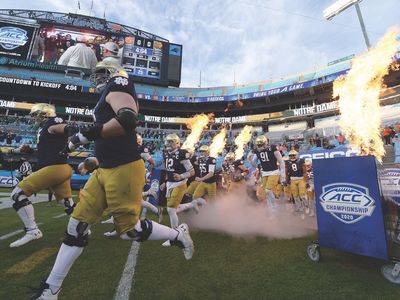
On Dec. 19, the undefeated Fighting Irish arrived at Bank of America Stadium in Charlotte, N.C., marking the beginning of the playoff season for the team. The ACC Championship set the stage for the highly anticipated Notre Dame-Clemson rematch, after the No. 4 Irish defeated the then-No. 1 Tigers during their regular season matchup in South Bend.
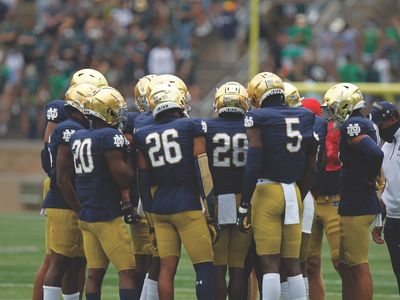
It was a matchup that was supposed to happen on Sept. 26 at Wake Forest, but because of COVID-19, the game was rescheduled to Dec. 12. Unfortunately, seven Notre Dame football players tested positive for the virus several days before the originally scheduled game, which resulted in the isolation of 13 players. Furthermore, the Notre Dame football program wanted to ensure the safety of the rest of its players, so it paused all football-related activities for several days. Head coach Brian Kelly stated that “with student-athlete health and safety our primary focus, we will continue to follow our prevention protocols and ongoing testing procedures.” In the meantime, it was time for the team to redirect its attention to the upcoming game against Florida State.
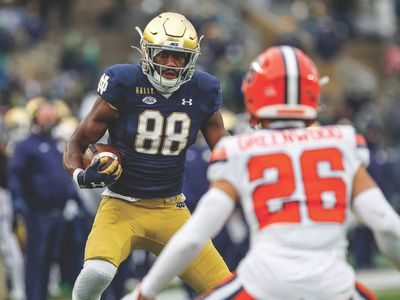
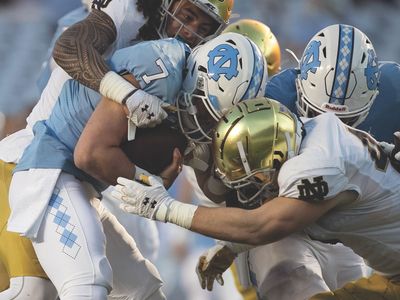
After a well-deserved bye week, the No. 2 Irish (8-0) traveled down to Chapel Hill for a Friday afternoon game against the No. 19 North Carolina Tar Heels (6-2). Notre Dame came into the game off of two of their best wins of the year but also had given up 71 points in those two games, which was more than they had allowed in the first six games. This could’ve been a major problem, as the Tar Heels touted a strong offense led by their two star running backs: Javonte Williams and Michael Carter.
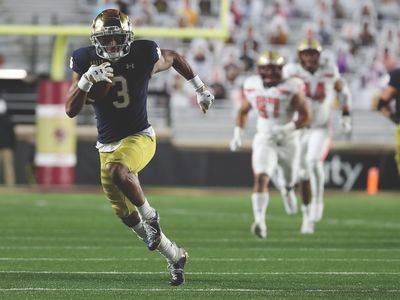
There were many factors to consider before Notre Dame’s game against Boston College: it was only Notre Dame’s third away game of the season, it was quarterback Phil Jurkovec’s opportunity for revenge against his former school, and it took place a week after Notre Dame’s thrilling double-overtime win against No. 1 Clemson. The setting felt eerily similar to the 1993 Boston College upset against the Fighting Irish only a week after Notre Dame’s win in the “Game of the Century” against No. 1 Florida State. Despite Notre Dame being projected as a 13-point favorite, these factors combined to make many Irish fans feel nervous before kickoff.
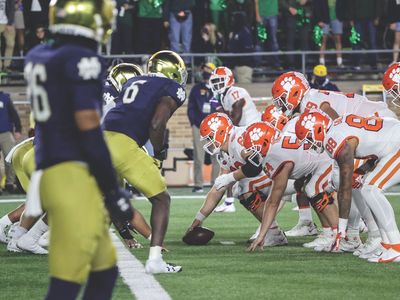
Notre Dame’s 42-14 loss to Alabama in the 2013 national championship game marked the nascence of murmurs that, maybe, the Irish weren’t cut out for the big games. Those murmurs began to crescendo over the years as Notre Dame lost top-10 matchups against Florida State (2014), Ohio State (2015), Miami (2017) and Clemson (2018). Add in two close losses to Georgia (2017, 2019), two last second losses to Stanford (2015) and Clemson (2015) along the way and by the time No. 4 Notre Dame and No. 1 Clemson met inside Notre Dame Stadium in 2020 the roars were loud and clear: “Notre Dame can’t win a big game,” “Notre Dame doesn’t belong with college football’s elite.”
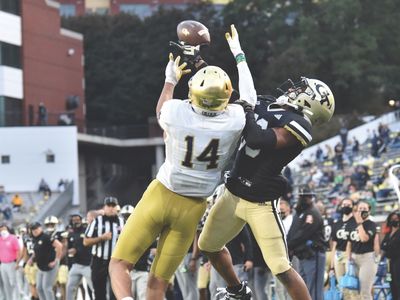
Facing a mediocre 2-5 team with the Clemson matchup on the horizon, No. 4 Notre Dame’s game against Georgia Tech had the markings of a trap game. But in order to stay on track for a playoff berth, the Fighting Irish needed to handle business in Atlanta on Halloween.
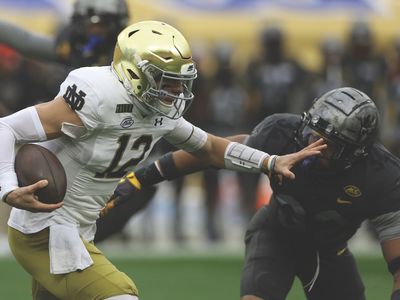
A month and a half after their first game, with a season-threatening COVID-19 outbreak in between, the undefeated No. 3 Fighting Irish were finally forced to leave the friendly confines of Notre Dame Stadium and go on the road to face the Pittsburgh Panthers.
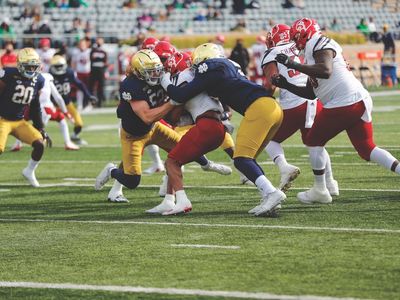
After cruising through the first three games, No. 4 Notre Dame hit its first major roadblock of the season versus Louisville. Against the backdrop of future foe Clemson’s 73-7 rout of Georgia Tech, the Irish (4-0, 3-0) survived against the Cardinals (1-4, 0-4) 12-7. The team extended the FBS-longest active winning streak to 10 games, but with a matchup against No. 1 Clemson looming on the horizon, the win was anything but far-reaching.
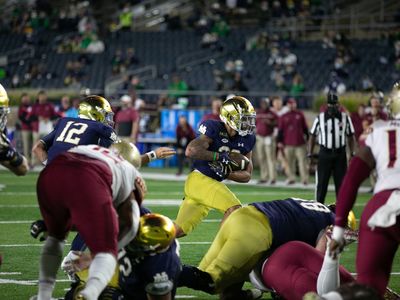

With everything that is different about this season for Notre Dame women’s basketball –– a new head coach, new teammates, new protocols, and a uniquely designed schedule –– the team’s steadfast commitment to causes bigger than themselves and to helping others remains unchanged.
The coronavirus has radically transformed the landscape of college sports, and after initial worries, Notre Dame fans are fortunate to still enjoy a 2020-21 season. Student attendance at games, even in a limited capacity, has helped to elevate the atmosphere and maintain the feeling of excitement despite coronavirus-related adjustments.
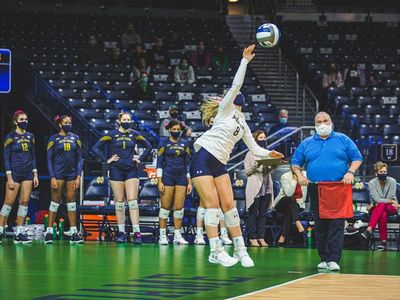
With an impressive 6-1 record at the conclusion of the fall ACC volleyball schedule, Notre Dame is ranked No. 5 heading into their spring schedule, which will allow them to compete for a national championship.
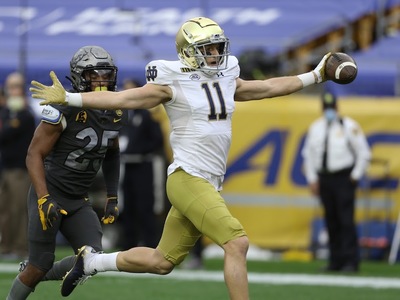
Despite COVID-19 disrupting countless aspects of a normal season, all of the pieces appear to be falling into place for the Notre Dame football team as they approach the season’s marquee matchup against Clemson.
This weekend, South Bend will host an undefeated matchup between No. 1 Clemson and No. 4 Notre Dame.
100 — The percentage of Notre Dame football players who have registered to vote. One way to make change is through voting, and the Irish football players are leading by example at the moment.
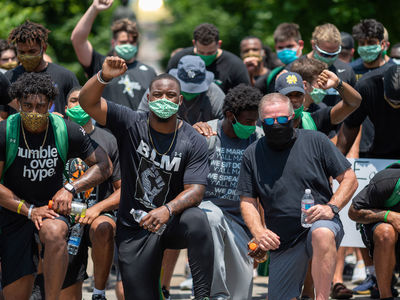
A graduate defensive end, Daelin Hayes has played a significant role on the stout Notre Dame defense throughout his collegiate career. Hayes was a top-300 recruit coming out of high school from Bellville, Mich., and in his freshman year, he played in all 12 games.
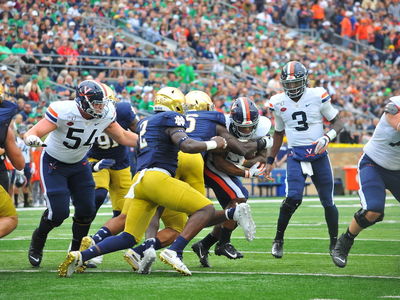
With everything that was different about this off-season for third-year Notre Dame defensive coordinator Clark Lea, the need to replace last season’s graduated talent remained unchanged.
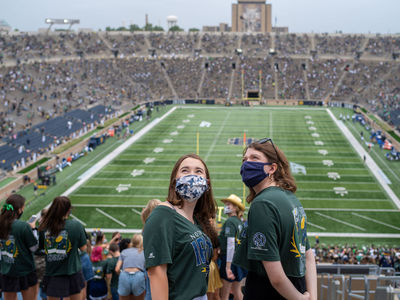
“These unprecedented times” are the words that seem to populate every email and TV advertisement seen today. The four-word phrase may be overused and somewhat annoying to hear so often, but it nevertheless rings true, and is felt very heavily on a game day in South Bend.
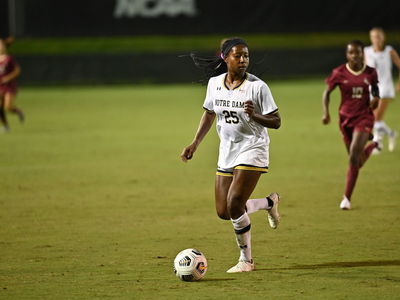
Last year, in his second season as the head coach of his alma mater, Nate Norman led the Fighting Irish women’s soccer team to an 11-8-2 overall record, as well as to the second round of the NCAA tournament for the first time since the 2015-2016 season.
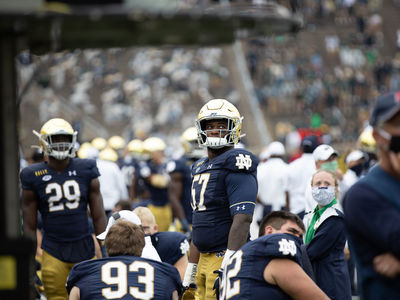
The second week of March saw the sports world grind to a complete halt. In just one week, athletes went from preparing for tournament runs, an upcoming season or the biggest event of their lives, to sitting home waiting for what would come next. But no one knew what the future would hold for collegiate and professional athletics in the United States.
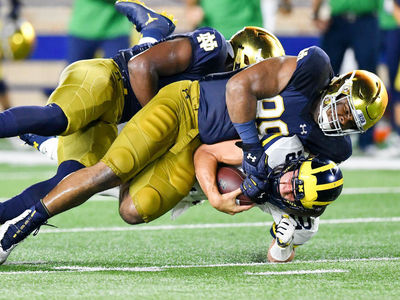
Take a second to put yourself in a pandemic-free world, and the Notre Dame football team would have just returned from Dublin, hopefully after a victory against Navy. With a win, all would be right in the world.
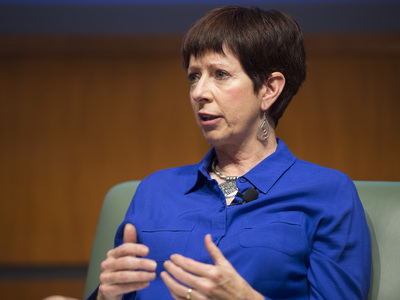
As a young girl growing up in West Chester, Pa. during the 1960s, Ann “Muffett” O’Brien was constantly reminded of what she couldn’t do, especially when it came to athletics and playing basketball with the boys.
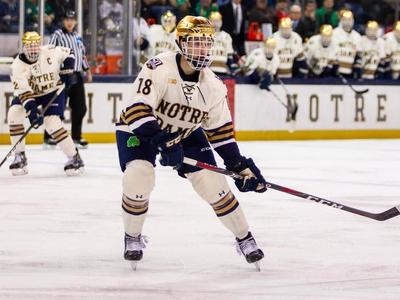
In the summer of 2015, rising college freshman Jack Savage and rising sophomore Nick Savage consumed oxycodone and alcohol at a grad party, and then went home and went to bed. When their mom woke up the next day, both were dead.
525 – The jersey numbers of Jack (5) and Nick (25). The name was inspired by a photo of the two in their jerseys displaying these numbers.
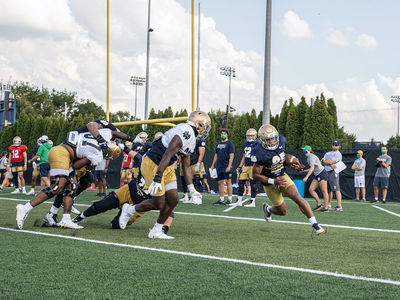
Throughout the summer, questions about the state of college athletics popped up around the country. Although NCAA President Mark Emmert stated, “We cannot, at this point, have fall NCAA championships,” the NCAA is hoping to host fall championships in the spring. Notably, this statement does not apply to college football, as the NCAA does not have oversight of the Football Bowl Subdivision championship, the College Football Playoff. While details surrounding various fall sports seasons and championship formats remain unclear, Notre Dame fall sports athletes have begun to practice.
As the team jogged off the diamond after securing their first midweek win of the season and their seventh in a row, everything seemed to be going right for Notre Dame baseball and first-year Head…
36 — The number of days since the last Notre Dame athletic competition.
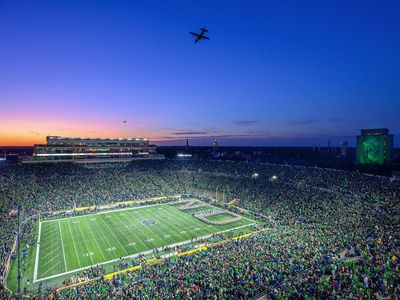
Like almost everything else, the future of sports may be changed forever because of COVID-19. Currently, all professional and collegiate sports have been postponed or canceled; Wimbledon and The Open have also been canceled. This has led to the question: when will we get sports back?
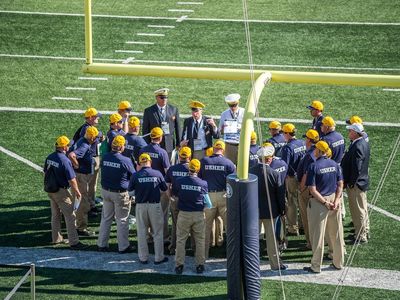
The lack of collegiate and professional sports during this pandemic has allowed the writers of Scholastic to reflect on aspects of athletics that usually do not get placed in the spotlight. This story provided me the opportunity to thank members of the gameday experience that seldom receive recognition: the ushers.