AI at Notre Dame
What do we owe our own work?

“Please help us reduce case rates,” Erin Hoffmann Harding and Mike Seamon asked near the conclusion of their Feb. 17 announcement on heightened COVID-19 regulations on campus. The new restrictions were the result of a spike in cases in the days prior, which saw case numbers jump from 17 to 48, a 182% increase, within the 24-hour period of Sunday, Feb. 14.
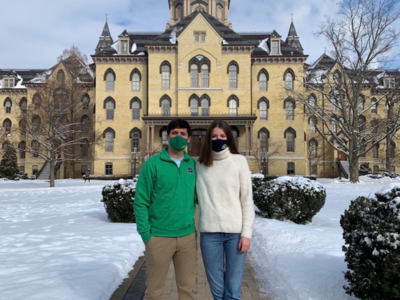
Juniors Mabry Webb and Jacob Calpey felt a duty to run for student government president and vice president this year because of a shared love for the Notre Dame community.
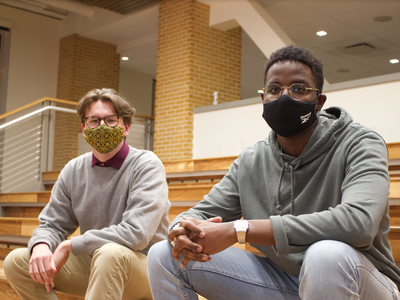
Allan Njomo and Matthew Bisner stood out to the Scholastic staff as the best choice to serve the student body for their comprehensive platform, demonstrated understanding of student needs and background in student government.
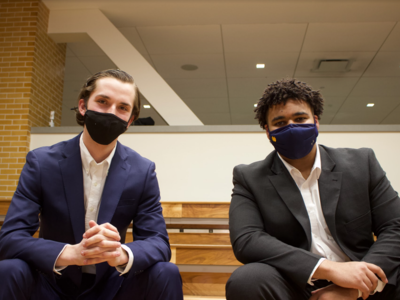
Juniors Max Siegel and Zach Holland aren’t your typical Zahm ticket: They’re juniors — not freshmen — and they’re serious about this campaign. And although they met each other in the infamous house, Siegel and Holland say they are opposites.
“Be bold,” declares Allan Njomo and Matthew Bisner’s campaign slogan. And the ticket’s accompanying platform — filled with detailed plans for equity, accessibility and student well-being — certainly promises a bold agenda.
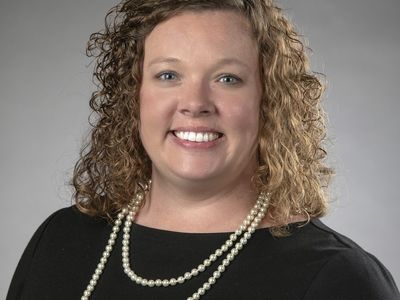
In May of 2020 the Department of Education (DOE) announced the new Title IX Rule, which introduced and amended many Title IX regulations. It would go into full effect Aug. 14, giving the University of Notre Dame, and all other schools, less than four months to discuss and implement measures compliant with the Rule.
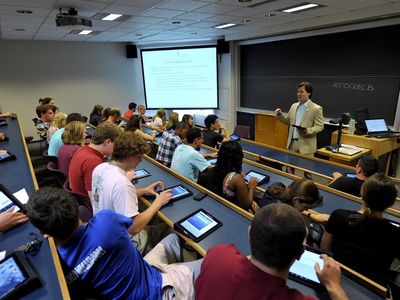
About a decade ago, the University of Notre Dame investigated the idea of expanding technology use in the classroom. In an article written for the November 2010 issue of Scholastic, Caitlin Wilson summarized a project management class where students were lent an iPad for their convenience.
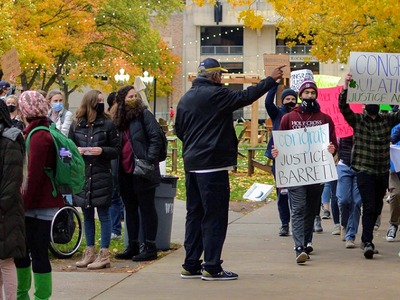
Beneath Notre Dame’s iconic mural of “Touchdown Jesus,” a group of students gathered on Library Lawn. Their bright colors popped beneath gray skies — most sporting pink, some draped with the colors of the rainbow.
"No fall break. Can’t go home. Can’t visit new places. Can’t catch up on sleep. But you still need a break!” This was the slogan that Notre Dame’s McDonald Center for Student Well-Being used on their website to advertise Restoration Week.
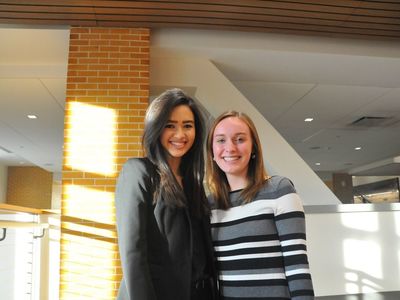
Our hearts ache with the news of the passing of first year students Valeria Espinel and Olivia Laura Rojas.
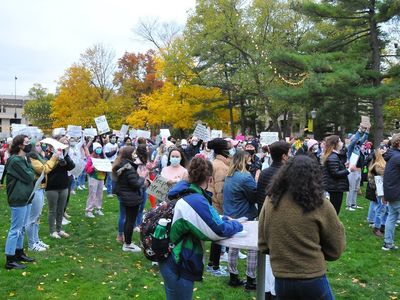
Judge Amy Coney Barrett has brought more press to Notre Dame recently with her nomination and recent confirmation to the Supreme Court on Monday October 26.
Over a ten week winter break, the University of Notre Dame will be piloting its first Winter Session, during which many forms of virtual experiences will be offered for students who want to use the time for networking, service, academics or research.
The evolution of Catholics’ role in American politics has been “one of the most dramatic changes in American political life over the last, say, 50 years,” said David Campbell, Notre Dame professor of political science. Campbell is the author of several books examining the role of religion in American politics.
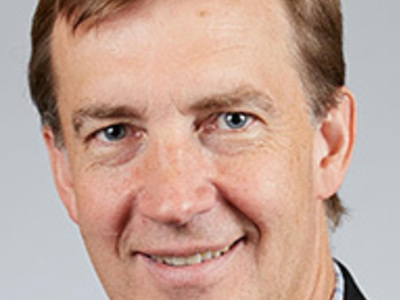
Graham Peaslee is a professor of physics and concurrent professor of chemistry and biochemistry, whose research focuses mainly on applications of nuclear physics. Peaslee’s commitment to the principles of education is a common thread within all of his responsibilities.
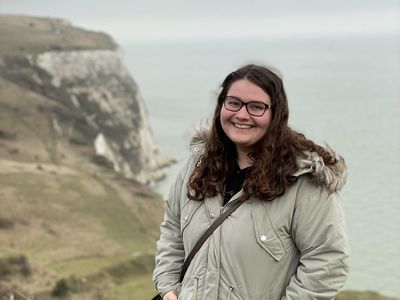
Recently it seems that every year has been crowned historic in nature for one reason or another. But 2020 actually fits the bill, if only due to the sheer number of pivotal moments it has yielded.
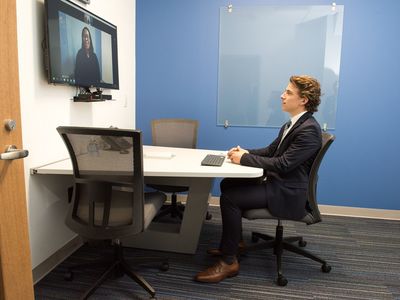
The Notre Dame Center for Career Development hosted its first virtual career fair last month, bringing together over 2,600 students and 242 employers in an event they had been anticipating since Notre Dame went online last spring.
In response to the nation’s growing racial justice movement, Rev. John I. Jenkins, C.S.C. announced several efforts the university is making to enhance diversity and inclusion, including modifications to the Moreau First Year Experience course and the creation of a diversity center.
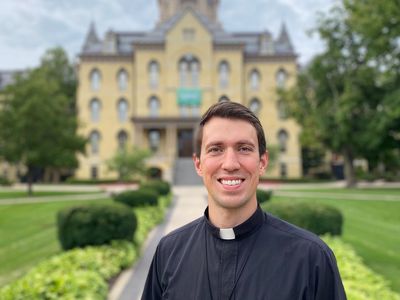
Rev. Joseph Pedersen, C.S.C. of Waterloo, Iowa, serves Notre Dame as the rector of Siegfried Hall. He has an extensive history with the university, receiving undergraduate degrees in philosophy and theology, a Master of Arts in theology from the university’s Echo Graduate Service Program, and a Master of Divinity.
In 1918, Notre Dame had to cancel three out of its nine football games due to an outbreak of the Spanish flu. But this hitch did not entirely derail Notre Dame’s season that year.
As we hit the midterm mark of the semester, we are taking this opportunity to reflect on what moments have been worth celebrating and to be intentional about what initiatives to take on in the future.
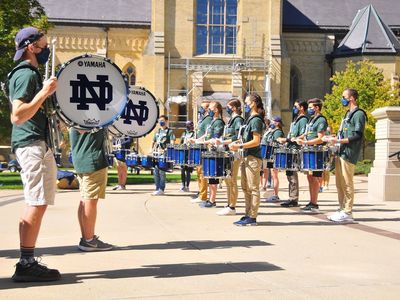
Spread amongst the northwest bleachers, the Band of the Fighting Irish was still an indelible part of the game day experience. But the pandemic has challenged some of the group’s longest-running traditions, many of which were thought to be integral to the ensemble’s identity.
The beginning of the semester has been an absolute whirlwind. As leaders, we are learning that one of the most important things we can do in this time is listen. Every day, the situation ahead of us takes shape in a new way, and there is no way to predict the course of the semester. However, we will do our best to actively seek out student voices, critically monitor our systems and respond with empathy.
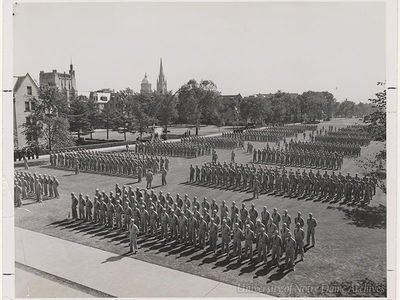
Amidst the rage of World War II in the Aug. 14, 1942 issue of Scholastic, the students of this university faced a similarly complicated, unstable and daunting environment. At the onset of the fall semester, President of the University Rev. Hugh O’Donnell, C.S.C. issued a letter to the student body in order “to keep the students accurately informed of developments vital to their welfare in the current emergency.”
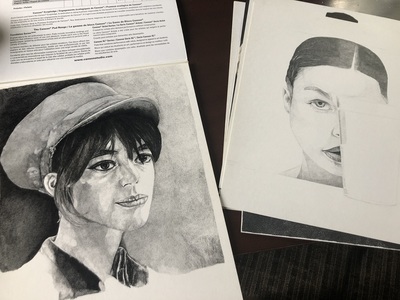
His name is arguably as majestic as his creations: Maclovio Cantu III. However, to the 140 or so residents of Sorin College who see him every day, Cantu, the dorm’s maintenance man, is simply known as Mike. For the past two years, Cantu has worked as the head custodian of Sorin while assisting with cleaning services in other dorms. But his presence at Notre Dame and in the South Bend community goes back much further.
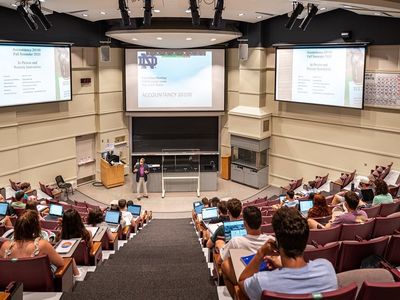
While many people probably envisioned that a return to Notre Dame would entail difficulties surrounding health and safety, the campus community has also had to grapple with another hurdle: division. Though the Fighting Irish pride ourselves on the unity of our community, COVID-19 has positioned students, faculty and administration at odds with one another.
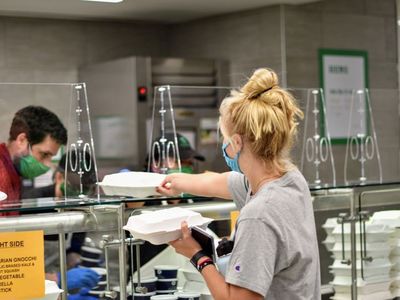
When sophomore James Gilman went to North Dining Hall for the first time this semester, it wasn’t at all how he remembered it. “My first meal back on campus was a box of lettuce topped with one cherry tomato,” he said.
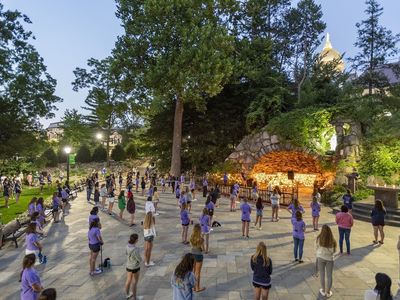
There’s no denying that the Notre Dame community is constantly adjusting to new norms and rules brought about by COVID-19, but there’s one group of students who have an additional adjustment to make: the first years. Being a freshman in college is always an experience, so what does it look like to be a freshman during a pandemic?
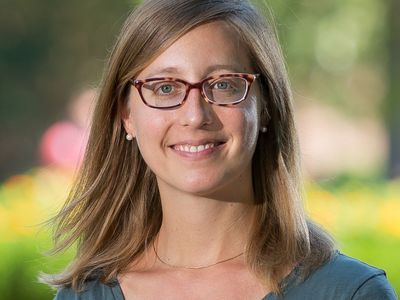
Laurel Daen is an Assistant Professor of American Studies at the University. She works with the John J. Reilly Center for Science, Technology, and Values and specializes in disability, sickness, medicine, and health in early America. She is currently writing a book about disability and civil rights, and has been published in the Journal of Social History, Journal of the Early Republic, Early American Literature, History Compass, and Rethinking Modern Prostheses in Anglo-American Commodity Cultures, 1820-1939. This semester she is teaching “Epidemics in America,” a course which looks at the history of health and disease in American history and its influence on the longlasting culture of the country.
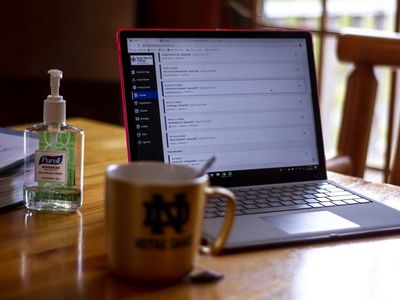
Scholastic wanted to hear firsthand from Notre Dame students about their experiences away from campus and transitioning to asynchronous learning.
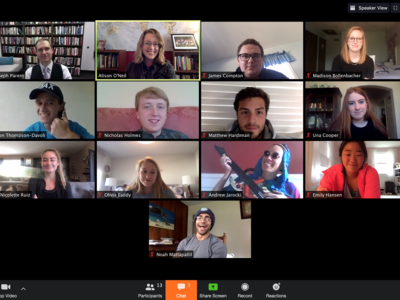
Notre Dame students and faculty had to quickly adjust to a new educational reality, completing the semester’s coursework while scattered across the globe.