
Reconciling with the changes artificial intelligence brings means professors scrambling to create reasonable boundaries surrounding its usage, students trying to determine whether their critical thinking skills are diminishing and all of us justifying the environmental costs of data centers. To us, university students living in the West, this new era of technology is scary, but one that will undoubtedly make life more efficient. Efficiency is the driving force behind this rise in AI; it accelerates productivity to such an extent that we often fail to remember what this threat of efficiency means in the context of war.
The Guardian reports that efficiency in war means moving from manually identifying 50 targets per year within a given region to suddenly having 100 targets generated in a single day. It means allowing operators to strike those targets without switching interfaces. It means instantly producing databases of tens of thousands of people authorized for assassination — each person reduced to a single phone signal. AI made this scale of efficiency possible.

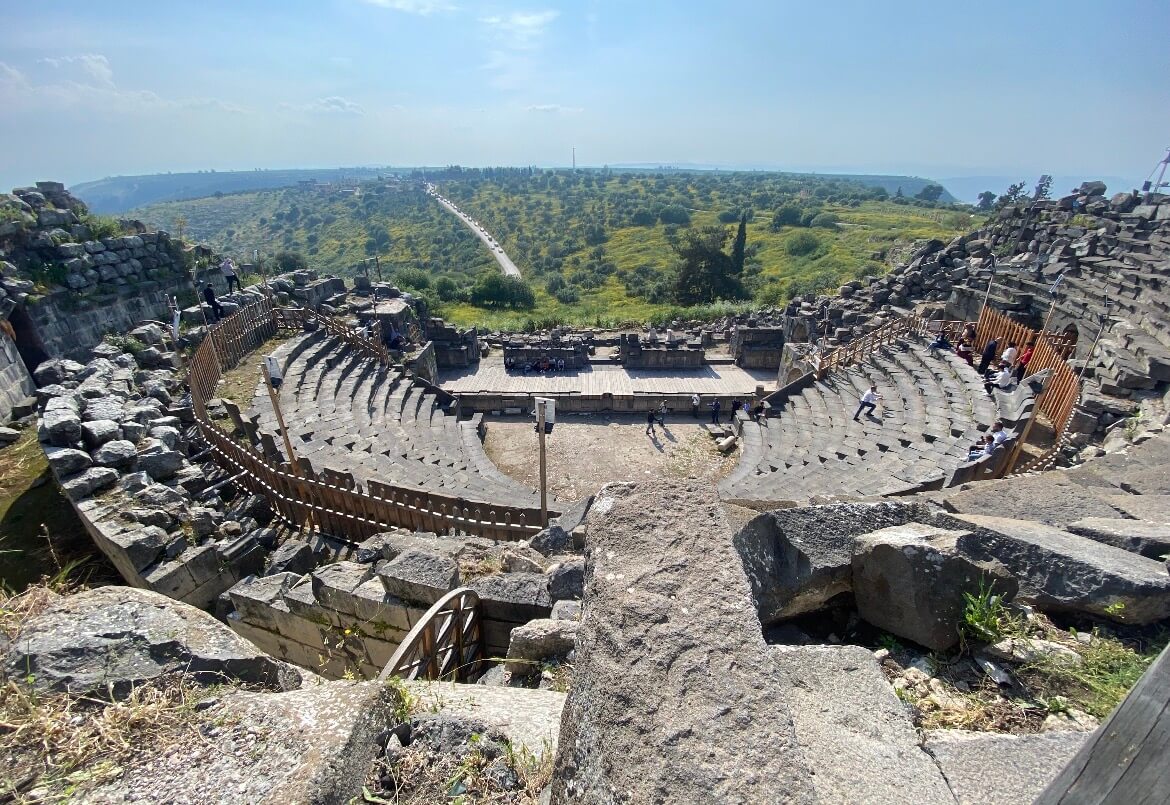
I bore witness to this deadly level of efficiency while on the roof of my apartment in Amman, Jordan. Throughout my years living in the Middle East, I watched missiles fly above my home and vaporize into a deep blue halo as they were intercepted, their sheer force shaking my bedroom windows. This eventually culminated in the exchange of fire between the U.S., Iran and Israel; suddenly, the targets AI had been able to compile within seconds were buildings and infrastructure directly next to my apartment complex.

Fortunately, I was never in real danger. I had the resources and capabilities to leave — that is far luckier than many families and people across the Middle East. While living in Jordan, I had the opportunity to talk to refugees from Iraq, Palestine and Syria: children, working men, mothers and teenagers who were displaced by this newfound efficiency. While I only ever watched the weaponization of AI hundreds of miles above me, these people saw it manifested in the obliteration of their homes, the death of family members and the loss of jobs and futures.
Each individual story can now be reduced to a “collateral damage score”: a number stipulating how many citizens would be killed in a given strike, calculated by the IDF’s AI target-creation platforms. While each strike must be authorized first by a human, it becomes much easier to simply accept that collateral damage score as a small consequence when the complexity of a person’s story is reduced to a single number.
That same depersonalization accompanied more than 1,000 strikes across Iran within the first 24 hours of the 2026 war. The Center for Strategic and International Studies reports this was “a tenfold increase over what was possible” before the U.S.’s new Pentagon initiative that brought AI to warfare. One of those strikes was on the Shajareh Tayyebeh Elementary School in Minab — an action ultimately responsible for the death of more than 100 girls, per Amnesty International. While the attack is still under investigation, the possibility that AI identified the school as a target based on outdated intelligence represents the fatal consequences of automated targeting.
It seems to be increasingly evident that AI is sanitizing the act of war. War used to be a haunting commitment in which either side was directly exposed to the brutality and violence of their actions — each human loss was felt. Now, AI is assisting in making that loss distant.

In the Western world, this specific implication of AI is literally an ocean away from us; it’s completely intangible to imagine it being a determining factor in our life and death. Despite how hard governments seem to be fighting to diminish each human life down to a number, we must actively combat that narrative by remembering those devastated by war. The only way to maintain that humanity, to ensure each life is held in as much regard as the next, is to continue to do one of the only things AI can not do — to feel and love for those separated from us by only an ocean. We can never disregard how lucky we are to not be a part of an AI-generated collateral damage score.