 "
Most Notre Dame students have walked through the Main Building. Many have passed murals, plaques and portraits without stopping to ask what stories they tell, or what stories they leave out.
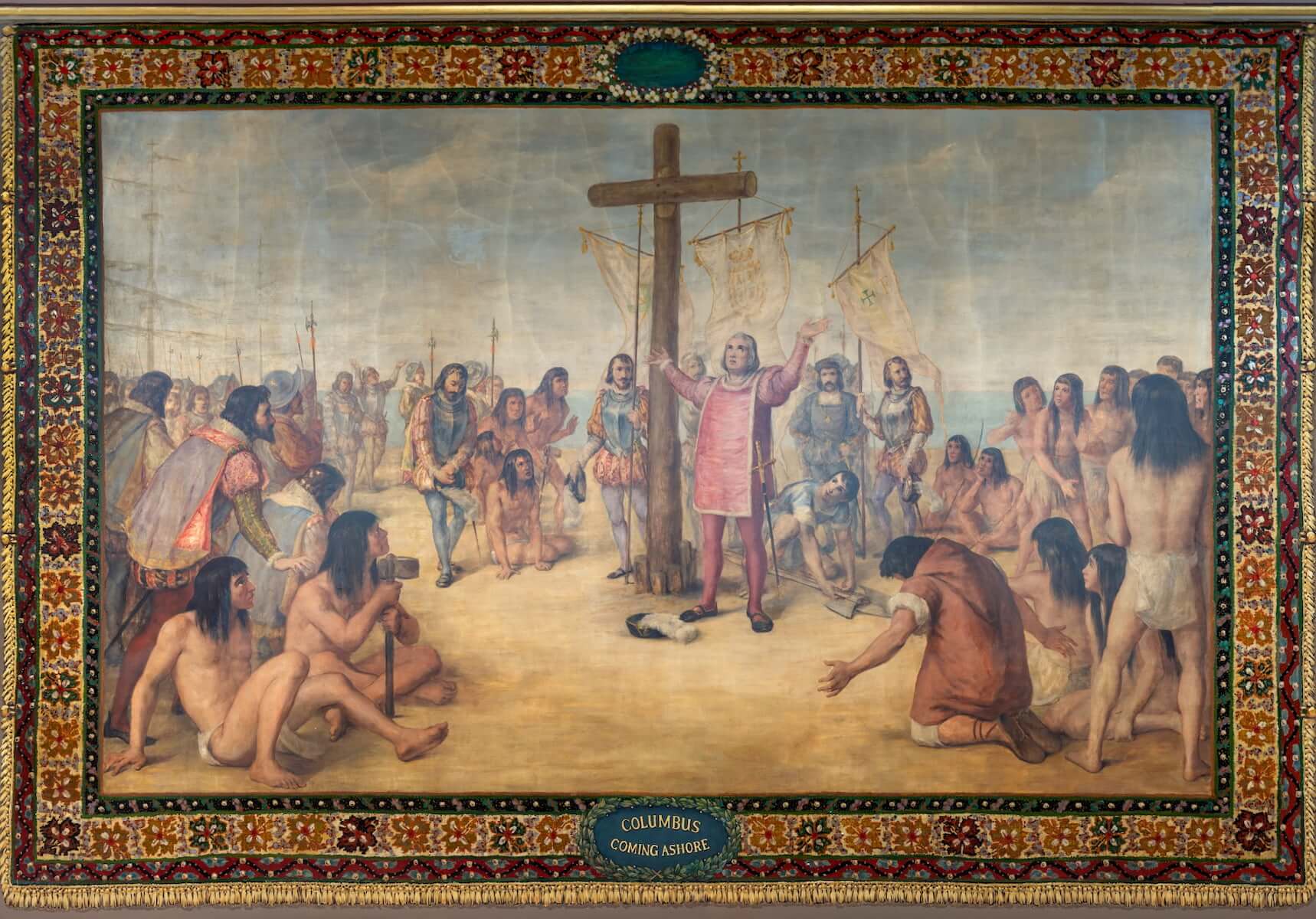
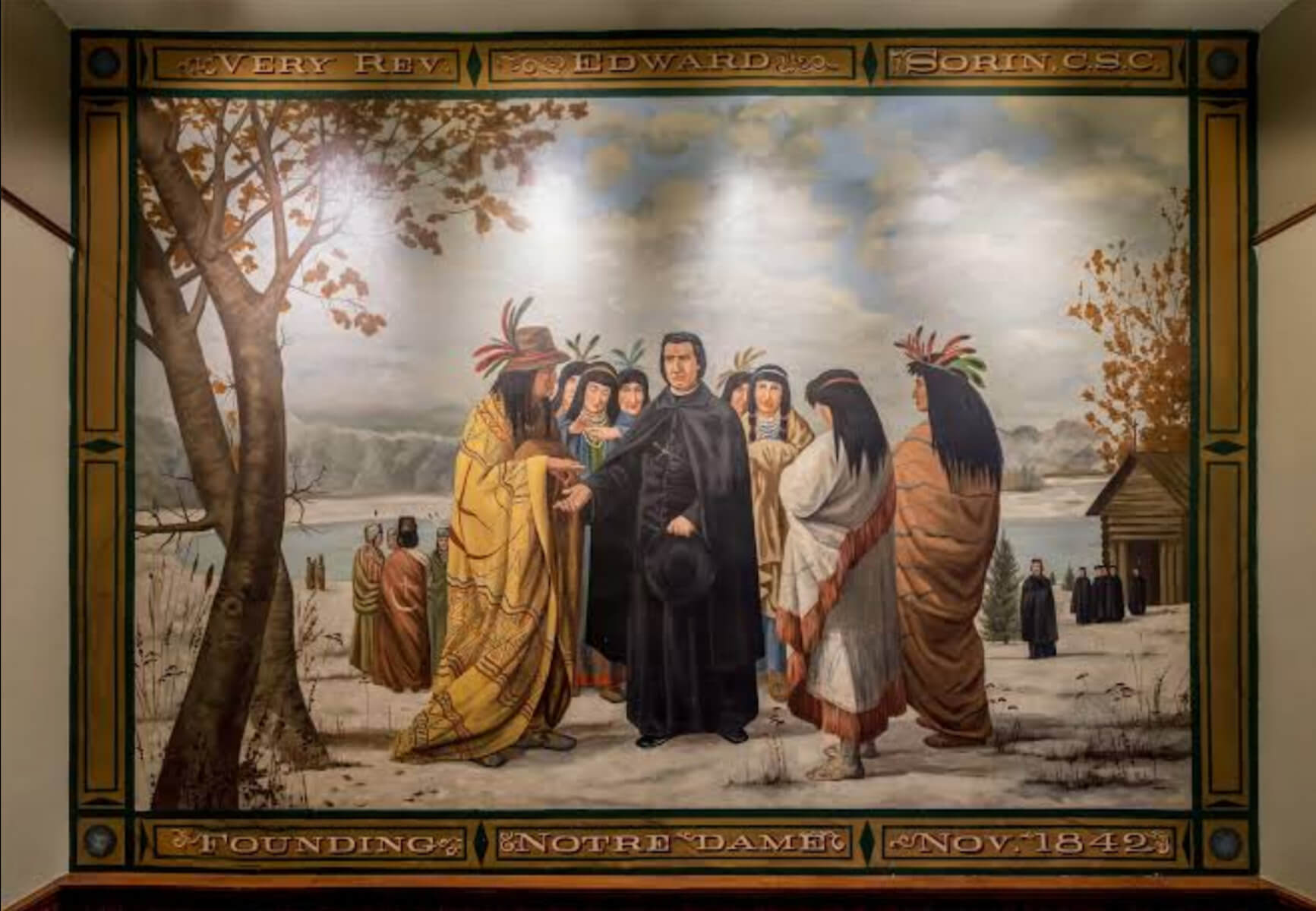
Or at least, I remember doing exactly that. At first, these images felt familiar. They reflected the mainstream version of Notre Dame’s history. The one that showcases Father Sorin, Catholic mission work and the founding of the university. Even the mural in the Main Building seemed to tell a very recognizable story; European figures stood at the center while Native figures appeared around them, reinforcing a visual language of conversion that many students may recognize from broader narratives and histories across the Americas.
Then, in one of my American Studies classes, a guest speaker, Zada Ballew, introduced a different perspective. One that I have never encountered before. Through archival images and historical materials, she showed that Notre Dame’s relationship with Native communities extends far beyond a single founding story. Instead, this bond reflects a history that has been continuously interpreted and reshaped through letters, monuments, speeches, paintings and public memory.
What I learned in that class led me to a more personal question. If these histories already exist, why do so few students encounter them, including me?
That question matters because history is more than just books in archives. Universities shape historical narratives. Therefore, the stories the students repeatedly encounter become part of how they understand institutions and their place within them.
Another example that stayed with me involved the Pokagon Band of Potawatomi. We found that historical accounts suggest Native leaders actively sought relationships with Catholic clergy and pursued education while navigating increasing pressure to assimilate into ‘western culture’ and threats of displacement by the U.S. government. This perspective complicates the ‘mainstream’ idea of the foundation of Notre Dame. Instead, it suggests a more layered history where the university was founded and shaped through negotiation and Native agency.
Yet stories like these rarely appear in everyday campus life or conversations.
This is why we decided to partner with the Native American Initiatives to imagine a different approach. Rather than creating another written report that would remain inside a classroom, we proposed using social media as a form of public history and communication.
The goal is extremely clear: not to make history more controversial or revisionist, but to make it more visible for the general public.
Through posts, interviews, detailed captions and visual storytelling, we hope to introduce students to Native American stories they may not otherwise encounter. Rather than directing students toward a single established historical interpretation, our objective is to encourage curiosity and invite them to engage with these stories on their own terms.
Some may argue that social media risks oversimplifying historical complexity. That concern is valid. However, from a marketing perspective, accessibility is not the same thing as simplification. A short post cannot replace the archives or classroom discussion. What it can do is create an entry point. This is especially true for those stories from marginalized communities that are never brought to the forefront.
History should go beyond asking students to memorize dates and names. Rather, it should encourage reflection and dialogue while inviting people to think more critically about the institutions they belong to and question the stories they carry.
If these stories really matter, they should not remain in the library archives waiting to be discovered.
They should become part of our campus life.