 "
"
Growing up in Northern Virginia meant reaping the benefits of proximity to our nation’s capital. From field trips to the Smithsonian museums, walks across the National Mall and many hours spent on the Metro (objectively the best public transportation system on the East Coast), I was spoiled from an early age. People forget, however, that driving out of the city offers its own benefits.
My favorite outside-of-DC stop was always Manassas, Virginia. Manassas is home to the historic Battle of Bull Run battlefields. My neighbor and I would drive through the battlefields on our way to summer camp at a farm in Manassas. I’d stare out the window at the cannons littered across open fields, the wooden fences leaning with time.
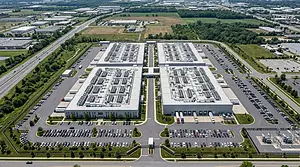
Now? There’s a data center right next door. The farm my neighbor and I used to spend hot summer days at is being replaced by computer systems enclosed by sterile white buildings. Right next to where Robert E. Lee faced the Union Army.
You can imagine my non-surprise when I found out about the proposed data center projects around South Bend. Because what goes better with tailgates and Touchdown Jesus than fiber-optic cables and AI systems? But on a serious note, the Northern Indiana data centers — and data centers in general — are more than just road trip eyesores.
Sophomore Katherine Spiller spent her summer doing research and fieldwork in the St. Joseph County Kettle Lakes Corridor, just west of South Bend. The area is home to a sensitive sphagnum bog habitat, containing many endangered and rare species. A proposed data center project would pose huge environmental threats to such a rich habitat. Already, some of the lakes are drying up, and the massive amounts of water used to power data centers would cause even more drainage in the kettle lakes. Without water — or a home — the species that live in the lakes would cease to exist.
“I believe hearing from those who see what the Corridor experiences ... is key to touching hearts and enacting positive change,” Spiller said. She asserted that over half of the people she interviewed brought up concerns about the effect of the data center on the local community, something that should compel tech companies and bystanders alike to step back and consider what they are supporting.
We live in a next-step world where society is constantly coming up with ways to optimize and streamline our daily lives, and data centers fit into this future-focused mindset. But they’re almost counterproductive to the things that truly matter. In Virginia, a historical site backdropped by mass innovation provides a scary juxtaposition between past and future. In Indiana, a local ecosystem is slowly being sucked away by the hand of AI. Sure, ChatGPT is great and all, but is this really what we want? Is this really what it means to live in 2026?